Lacking common cents: how Zimbabwe went from economic star to financial basket case


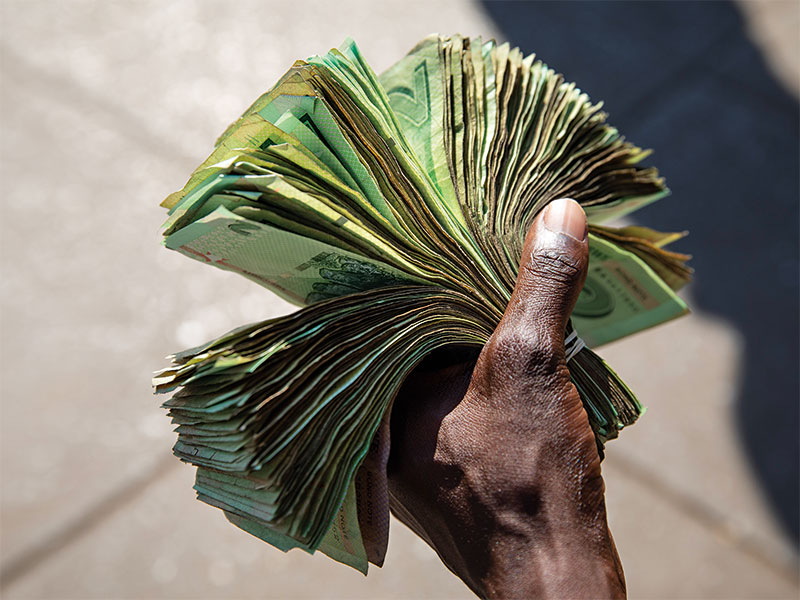
Zimbabwe was once hailed as the "breadbasket of Africa" and a model of economic development. The country had a thriving agricultural sector, a diversified industrial base, a robust education system, and a stable democracy. But in the span of a few decades, Zimbabwe has become a case study of economic collapse, political turmoil, and social unrest.
What went wrong? How did Zimbabwe go from being a prosperous and promising nation to a financial basket case with hyperinflation, poverty, and hunger?
The answer is complex and multifaceted, but some of the key factors that contributed to Zimbabwe's downfall are:
Land reform: In the late 1990s, President Robert Mugabe embarked on a controversial and violent land reform program that aimed to redistribute land from white farmers to black peasants. The program was poorly planned and executed, resulting in the displacement of thousands of productive farmers, the destruction of agricultural infrastructure, and the loss of foreign investment and markets. The land reform also sparked international sanctions and isolation, further crippling Zimbabwe's economy.
Corruption: Zimbabwe has been plagued by rampant corruption and mismanagement at all levels of government and society. Transparency International ranks Zimbabwe as one of the most corrupt countries in the world, with a score of 24 out of 100 on its Corruption Perceptions Index. Corruption has eroded public trust and confidence, undermined the rule of law and accountability, and diverted scarce resources from essential services and development projects.
Political repression: Zimbabwe has also suffered from a lack of democracy and human rights under Mugabe's authoritarian rule. Mugabe, who ruled Zimbabwe from 1980 to 2017, suppressed dissent, manipulated elections, and violated the constitution. He also clamped down on the media, civil society, and the opposition, creating a climate of fear and intimidation. Mugabe's regime was accused of committing gross human rights violations, such as torture, arbitrary arrests, and extrajudicial killings.
Economic mismanagement: Zimbabwe's economic policies have been characterized by inconsistency, inefficiency, and irrationality. Mugabe's government pursued populist and unsustainable measures, such as price controls, subsidies, and printing money, that fueled inflation and distorted the market. Zimbabwe also failed to diversify its economy and relied heavily on a few commodities, such as tobacco and gold, that were vulnerable to price fluctuations and external shocks. Zimbabwe's economy shrank by more than half between 2000 and 2008, and experienced hyperinflation that reached a peak of 79.6 billion percent in November 2008.
Zimbabwe's economic crisis has had devastating social and humanitarian consequences. The country's population has declined by more than 3 million since 2000, due to emigration, mortality, and low fertility. The country's life expectancy has dropped from 61 years in 1990 to 44 years in 2018. The country's poverty rate has increased from 25 percent in 1990 to 70 percent in 2018. The country's human development index has fallen from 0.54 in 1990 to 0.38 in 2018.
Zimbabwe's prospects for recovery and development are bleak, unless there is a radical change in the political and economic landscape. The country needs a genuine and inclusive democratic transition, a comprehensive and transparent anti-corruption campaign, a sound and consistent macroeconomic framework, and a supportive and cooperative international community. Zimbabwe has the potential to rise from the ashes, but it will require a lot of courage, commitment, and common sense.

The Process of Money Creation by Banks
Money creation is a complex process that involves various actors and institutions. Banks, in particular, play a crucial role in this process, as they are the ones responsible for creating most of the money in circulation. In this article, we will explore the process of money creation by banks and pr

If the bank collapses and we get our money back
The recent collapse of Silicon Valley Bank and Signature Bank has raised concerns about the safety of bank deposits and the role of the Federal Deposit Insurance Corporation (FDIC) in protecting them. The FDIC is a government agency that insures deposits in most U.S. banks and thrifts up to $250,000

Top 10 stocks with higher growth in the first half of 2023
In 2023, a new year unfolds, and the initial months have witnessed robust performance across the global stock market. Let's delve into the standout stocks that have exhibited notable strength in the first half of the year.1. Palo Alto Networks (PANW): This company is a cybersecurity firm that pr
Embracing Disruption: A Catalyst for Positive Change
In the world of business and technology, the term ‘disruption’ often carries negative connotations. It is associated with uncertainty, upheaval, and the displacement of established systems or practices. However, viewing disruption solely as a destructive force overlooks its potential to a