Tanzania’s hydroelectric dam project charges ahead despite environmental concerns


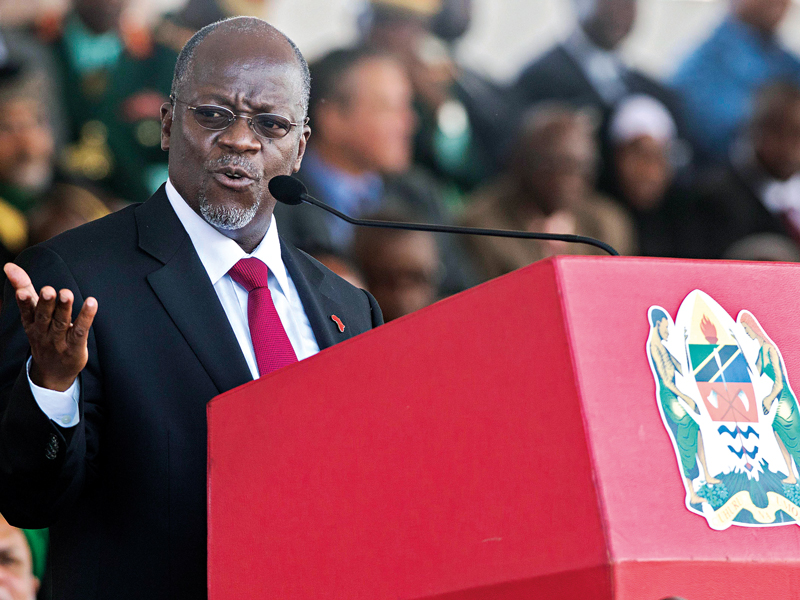
Ever since he was appointed Tanzania’s president in 2015, John Magufuli has pushed for much-needed industrialisation in the country. As the second-largest economy in the East African Community, Tanzania is often lauded for having huge untapped economic potential, but the country desperately needs to improve its transport links and increase its energy capacity if it is to boost commercial activity and unleash its potential. Magufuli has set himself a tight time frame in which to overhaul the country’s infrastructure, promising to have transformed Tanzania into a middle-income economy by 2025.
To achieve this ambitious goal, Magufuli is championing a number of major development projects. Between 2019 and 2020, the country plans to raise its total
The Tanzanian Government has largely ignored the significant impact that the dam will have on the local area and the tourist industry
But the crowning jewel of these megaprojects is the planned construction of a 130m-high, 700m-long hydroelectric dam. According to the Tanzanian Government, the dam – which will be built in Stiegler’s Gorge in the Selous Game Reserve, an area renowned for its outstanding natural beauty – is projected to increase Tanzania’s total electricity capacity generation by 2,115MW. But the project is mired in controversy, with many fearing it could bankrupt the country.
A domino effect
Unsurprisingly, news of the dam’s construction within the reserve’s borders has provoked international outrage. In a landmark move, UNESCO threatened to remove the Selous Reserve from its World Heritage List – something it has done only twice before. Meanwhile, the International Union for Conservation of Nature (IUCN) has condemned the project, calling it “fatally flawed” for its limited scope. “The current discussion is only focusing on the direct footprint of the dam and reservoir,” the IUCN said in a statement. “This is a dangerously narrow viewpoint as the impact will be much greater and far-reaching.”
According to
The dam is also likely to deliver a significant blow to Tanzania’s tourist industry: the majority of the
But the Tanzanian Government has largely ignored the significant impact the dam will have on the local area and the tourist industry. Usually, impact assessments help governments and developers to steer clear of heavy indirect costs – in fact, impact assessments are required under national law. However, in the case of the Stiegler’s Gorge project, none were carried out.
The closest the project got to a proper assessment was an analysis by the Consultancy Bureau of the University of Dar es Salaam, but experts in the industry consider this to be inadequate. This concern was highlighted by Joerg Hartmann, a consultant on hydropower sustainability, in his independent report on the dam’s feasibility. Hartmann wrote: “Compared to international good practice in hydropower, this is an unacceptably superficial level of information.”
Full steam ahead
Yet Magufuli’s confidence has not appeased those who continue to question the project’s economic viability. Even without factoring in the indirect costs to tourism and local communities, the sum of money put aside for the project is considerable. In 2018, $307m was allocated for the dam’s construction, while the total cost of the dam is
Hartmann believes it could be even more than that, though, estimating that the project could cost the country closer to $9.85bn – almost triple what the Tanzanian Government has budgeted for. This would make it “the costliest investment in the history of Tanzania”, he wrote.
The government has promised that the dam will bring economic benefits – such as more employment opportunities – to the region, but this claim so far seems unsubstantiated. While Energy and Minerals Minister Medard Kalemani has announced the project will create
If the cost of construction overruns as much as Hartmann predicts, this will have wide-reaching implications for foreign direct investment in the country. The more indebted the Tanzanian Government becomes, the less willing investors will be to do business with the country, trapping the Tanzanian economy in a downward spiral rather than modernising it.
Bulldozing in
The new hydroelectric dam would change this, and could even help realise Magufuli’s ambition to boost the electrification rate to
What’s more, the dam might not even produce as much electricity as the government claims: its impressive 2,115MW figure comes from a feasibility study carried out more than 25 years ago. Since then, the river has shrunk by about 25 percent due to a number of severe droughts. With even its energy capacity being thrown into question, the dam looks increasingly like an unjustifiably expensive vanity project incapable of bringing the economic benefit the government promises.
Once one of Africa’s success stories, Tanzania is now in peril. Until recently, the country enjoyed relative political stability; each year, it attracted foreign direct investment worth an average of
Nicknamed ‘the bulldozer’ for his forceful interventions, Magufuli has undermined Tanzania’s international standing throughout his tenure. In 2017, he accused Acacia, a London-listed mining company, of owing the country
He has also consistently undermined human rights in the country, with opposition politicians being shot and newspapers shut down. He recently drew widespread criticism for imprisoning the journalist
The hydroelectric dam is an economic catastrophe waiting to happen. But it’s also a catastrophe of Magufuli’s own making; to back down now would be to admit defeat in his eyes. If the project does go ahead, the hydroelectric dam will indeed be part of Magufuli’s legacy, an homage to the relentless and single-minded way he drove the country – whether towards financial success or ruin remains to be seen.
As one of the last remaining great wildernesses in Africa, the Selous Game Reserve is home to some of the continent’s rarest animals, including the black rhinoceros and African wild dog. To build the dam, a 1,000sq km portion of the reserve will need to be stripped of vegetation. Shruti Suresh, Senior Wildlife Campaigner at the Environmental Investigation Agency, warns that this “will inundate a major part of the reserve and have a significant impact on the functioning of the Selous ecosystem”.

Despite international bodies warning of unforeseen costs and even openly condemning the project, Tanzania is ploughing ahead. Magufuli maintains that it will become a linchpin of the country’s industrialisation. “Beginning today, this will indicate Tanzania is an independent country… and not a poor country,” he announced at the dam’s inauguration.

It could be argued that this is simply the price of industrialisation; there is no doubt that electrification would bring a much-needed economic boost to the country. Around