Venezuelan President Nicolas Maduro remains defiant as his second term begins


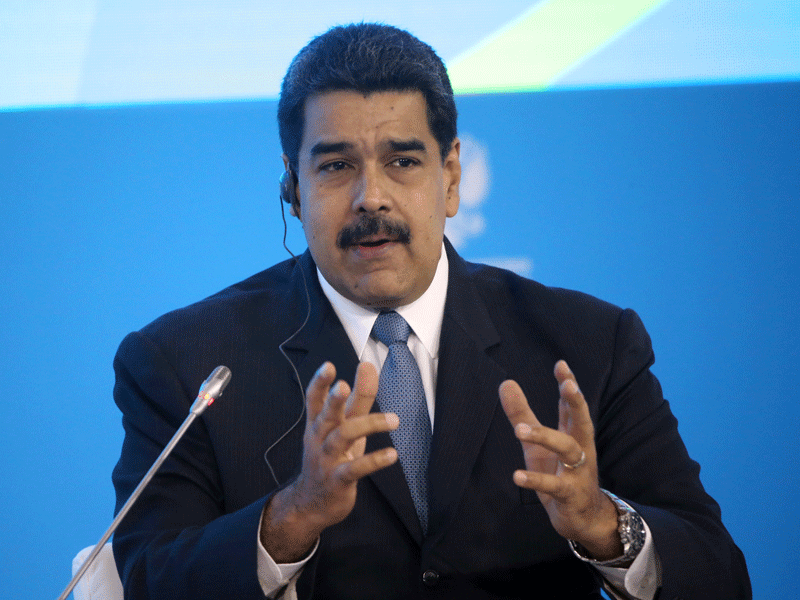
On January 10, Venezuelan President Nicolas Maduro began a second six-year term in power, despite an international outcry over the legitimacy of his re-election, further isolating the South American country in the iron grip of an economic and humanitarian crisis.
The 56-year-old heir of Hugo Chávez, Maduro has presided over the Venezuela’s worst economic crisis in history. The country’s economy has collapsed by almost 50 percent in the past five years,
While this so-called ‘economic war’ originated under Chávez, it has been exacerbated by Maduro’s failure to cut public spending during the 2014-15 oil glut and the subsequent devaluation of the country’s most precious commodity. Maduro, meanwhile, has blamed the crisis on a capitalist plot to drive up inflation rates.
Maduro was elected after Chávez’s death in 2013 by a margin of just 1.6 percentage points, the closest vote in the country’s history. His re-election in May last year was also mired in scandal, with accusations of vote buying and corrupt electoral processes running rife.
Last week, 13 of the 14 members of the so-called Lima Group, a Latin American bloc that includes Brazil, Argentina and Canada,
In the US, the Trump administration has also stepped up pressure on Maduro through the application of economic sanctions. The latest measures, announced this week by the US Treasury Department, aim to curb a currency exchange scheme that allowed corrupt government officials to siphon off billions of dollars in illegal profits.
“Our actions against this corrupt currency exchange network expose yet another deplorable practice that Venezuela regime insiders have used to benefit themselves at the expense of the Venezuelan people,” US Treasury Secretary Steven Mnuchin
President Trump himself
Most members of the Lima Group have called their diplomats home from Venezuela and will not send delegates to Maduro’s inauguration as per international custom,
Meanwhile, while the rest of the world turns its back on Venezuela, its citizens are desperately crying out for help. Rampant hyperinflation, currently approaching two million percent, has devalued salaries in the country to the point that the monthly minimum wage is not longer sufficient to purchase a box of eggs. The IMF
Venezuela’s
Maduro’s response to hyperinflation has been to raise the national minimum wage, which has only fuelled the issue further, meaning that Venezuelans spending ability actually decreases with every raise. In August 2018, Maduro
According to the United Nations, some three million people have emigrated from Venezuela since 2015, in a frantic bid to escape malnutrition and the rising crime epidemic. While Maduro’s government has repealed access to crime data and has ceased to publish official figures, research from the NGO Venezuelan Violence Observatory put the country’s violent death rate at 81.4 per 100,000 citizens in 2018. This makes Venezuela the most violent country in Latin America, with more deaths than notorious crime hotspots like El Salvador and Honduras.
As the country sinks further into socio-economic ruin, it seems increasingly less likely that it will be able to pull itself free without substantial international aid. All the while Maduro remains in power, however, there is scant chance of that aid coming to fruition. Meanwhile, the country’s impoverished citizens become ever more desperate, with malnutrition, disease and rising crime posing ever greater threats to their lives.